

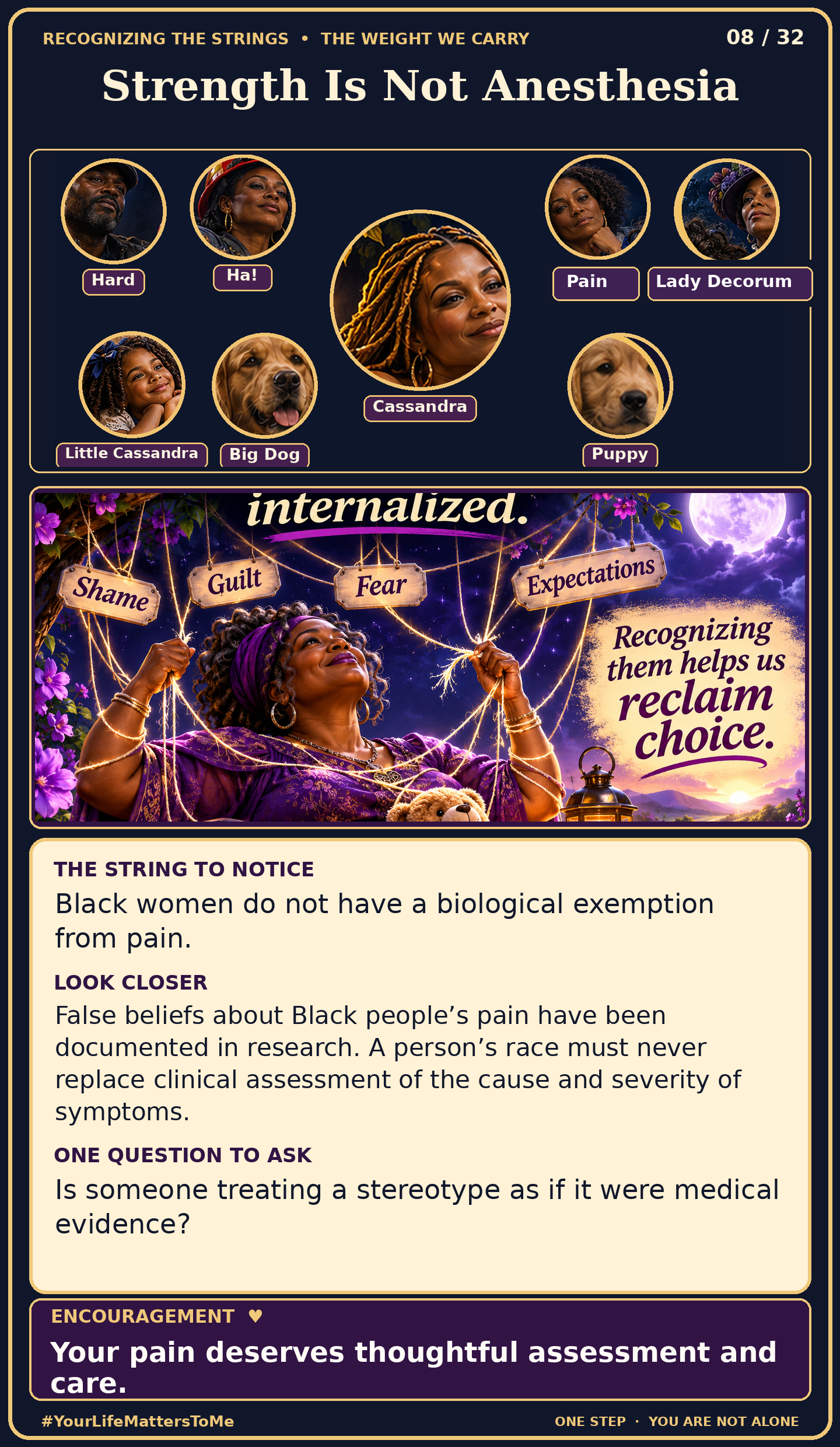
Card 08 — Strength Is Not Anesthesia Being strong does not make pain less real or reduce the need for appropriate assessment and treatment.
🎬 Today’s illustrated recognition cards
Wednesday’s illustrated cards examine the strings that can silence Black women’s pain reports and replace assessment with assumptions.
Beloveds,
A woman says, “Something hurts.”
Our investigation enters the hospital. One harmful string is the expectation that a Black woman must endure more pain because people have decided she is strong.
That statement should start a careful conversation, not a debate about whether she is believable.
Today I want us to examine an old and harmful assumption: that Black people have a naturally higher tolerance for pain. There is no sound medical basis for treating Black skin as proof that pain is less severe. Yet researchers have documented false beliefs about supposed biological differences, and in a 2016 study those beliefs were associated with biased pain ratings and treatment recommendations.
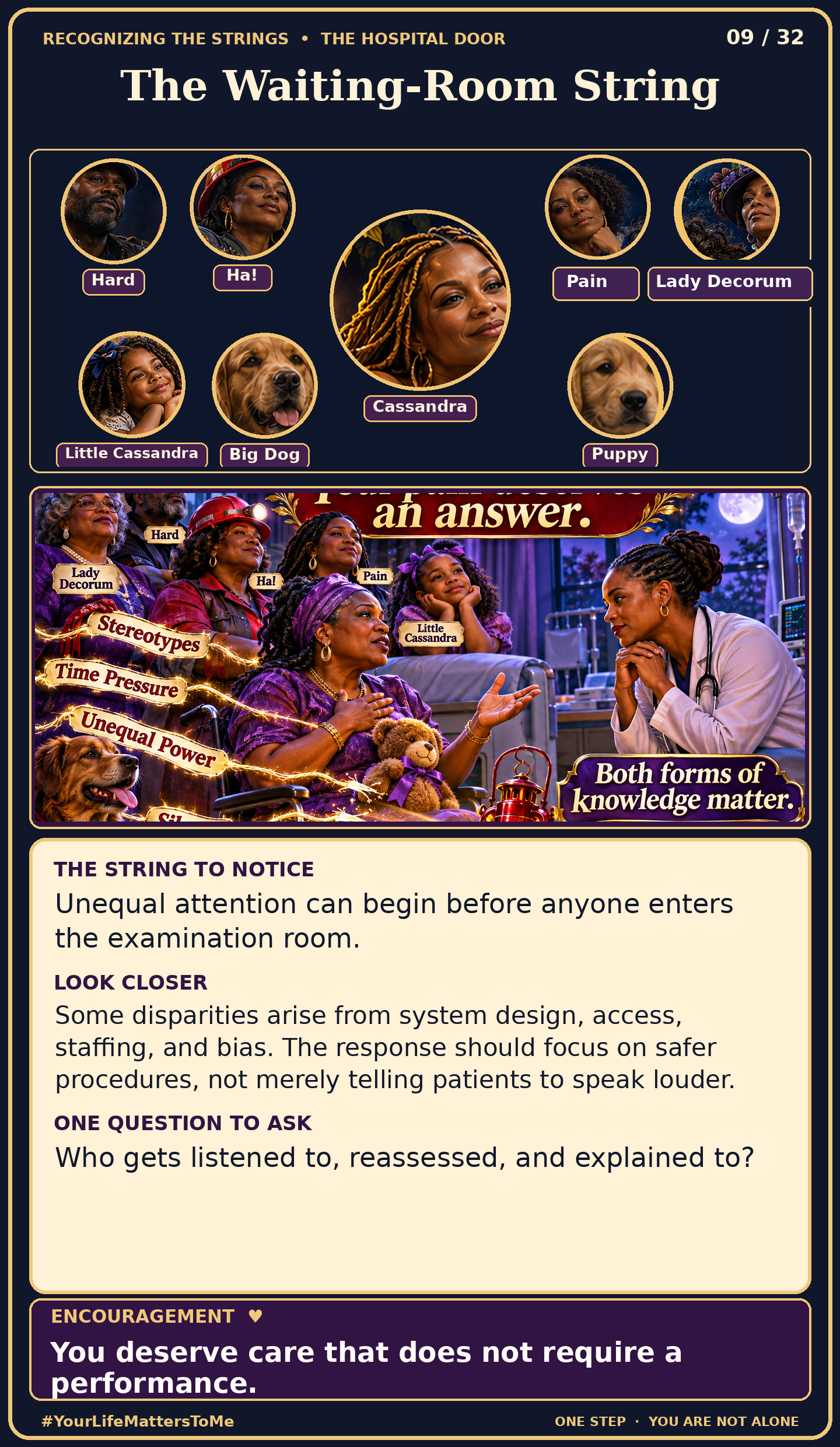
Card 09 — The Waiting-Room String Time pressure and fear of seeming difficult can discourage questions; the patient’s concerns still deserve attention.
Think about what that means in an ordinary hospital room. A patient describes her pain. Someone asks a question, or does not. Someone chooses whether to reassess the pain, investigate a cause, offer treatment, or explain why a particular treatment may be unsafe. Each decision matters.
Pain care is not always simple. Medication has benefits and risks; the correct plan depends on the person and the medical situation. But clinical complexity is no excuse for disbelief, ridicule, or withholding an explanation.
Black women should not have to become louder, more exhausted, or more distressed before their symptoms are taken seriously. And a woman who speaks softly is no less worthy of attention than one who can demand it.
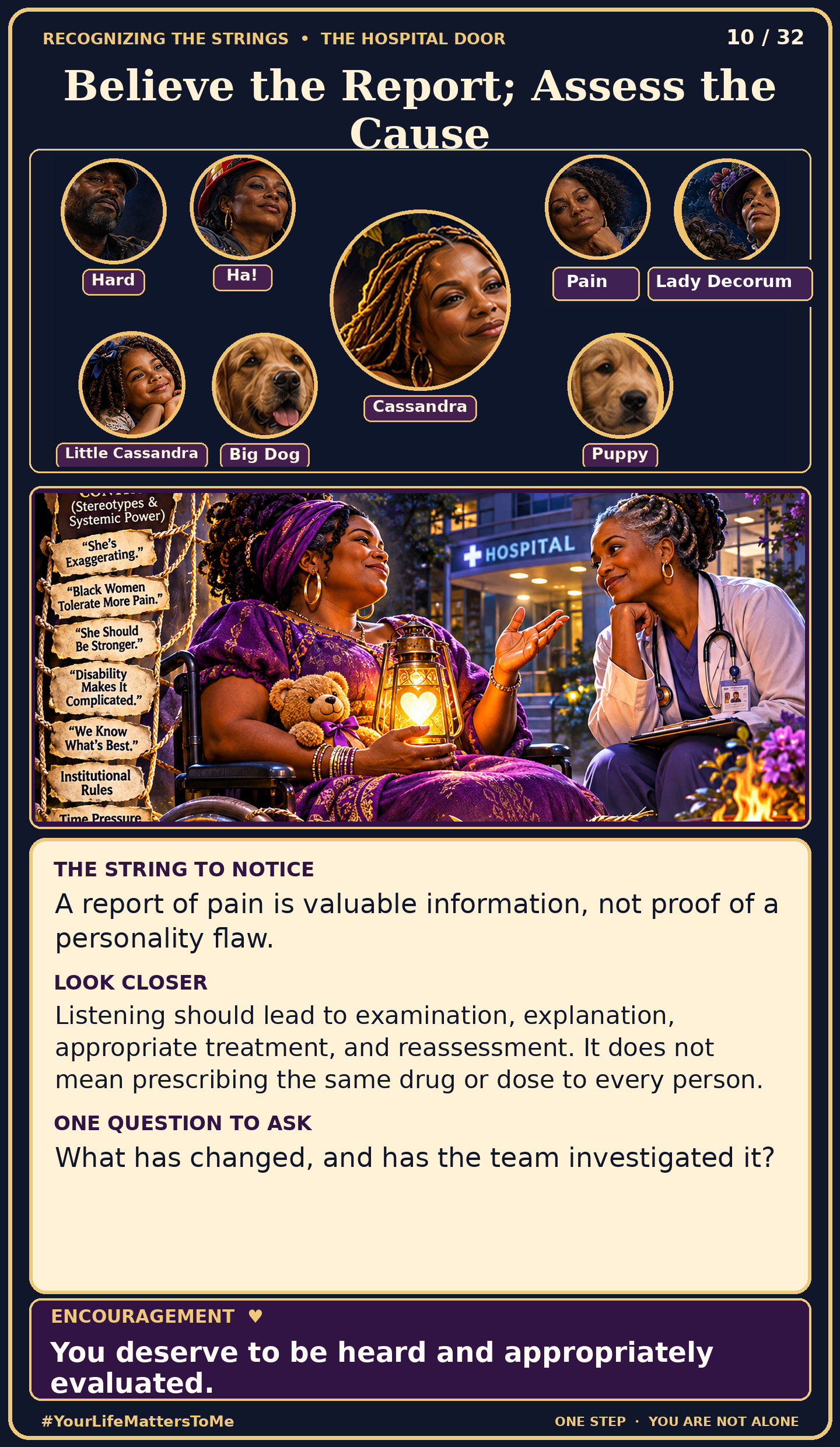
Card 10 — Believe the Report; Assess the Cause A patient’s description deserves to be taken seriously and followed by clinical evaluation of possible causes.
This is a Heart Check for patients, families, and professionals. Listening is not an optional courtesy tacked onto medical care. It is part of understanding what may be wrong.
For our Beloveds: The sentence “I am hurting” deserves an informed, respectful response. Every time.
🔦 Recognizing the String
The string is the unfounded idea of extraordinary pain tolerance. It may be reinforced through stereotypes, dismissed complaints, or clinical routines that fail to respond to changing symptoms. The Black woman reporting pain is not responsible for those failures.
Who holds power? Clinicians assess and recommend care; hospitals create policies and safeguards; patients contribute knowledge of their symptoms and preferences. Safe care respects all those roles without demanding that a woman become an expert in fighting to be heard.
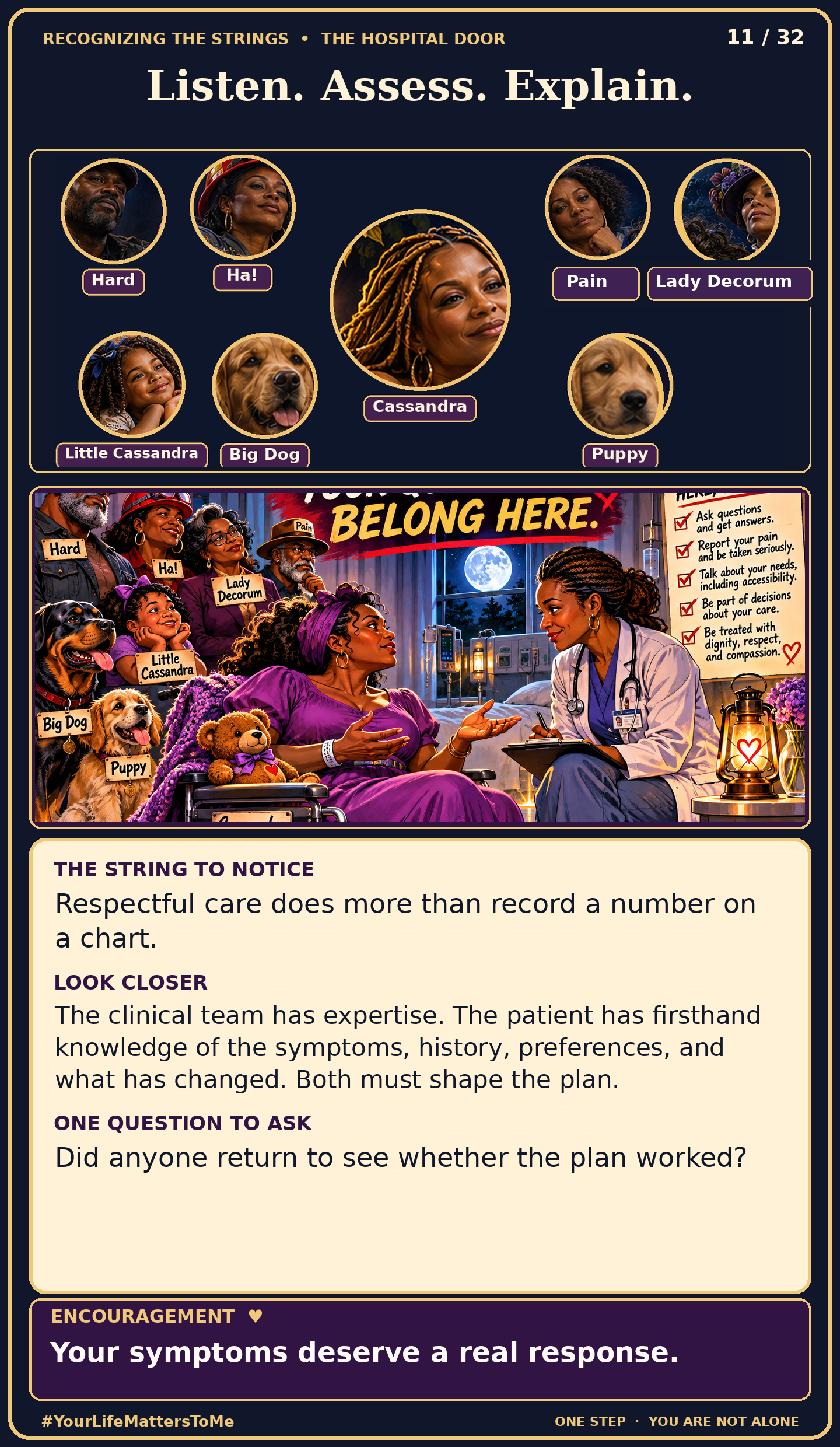
Card 11 — Listen. Assess. Explain. Respectful treatment includes listening, assessment, clear explanations, appropriate care, and reassessment.
Dismissal can mean overlooked symptoms, delayed treatment, and damaged trust. Recognizing this does not require guessing at an individual professional’s motives. It requires careful attention to decisions, communication, and results.
Better care listens without stereotyping, assesses possible causes, discusses appropriate options, treats when indicated, and reassesses when symptoms change or persist. Strength is not anesthesia. A pain report deserves an informed response.
One step. You are NOT alone.
A question for our Beloveds: What would change if every pain report prompted careful assessment rather than judgment about toughness?
loving me some you
Cassandra
#YourLifeMattersToMe ❤️
Read further: Research on false biological beliefs and pain assessment
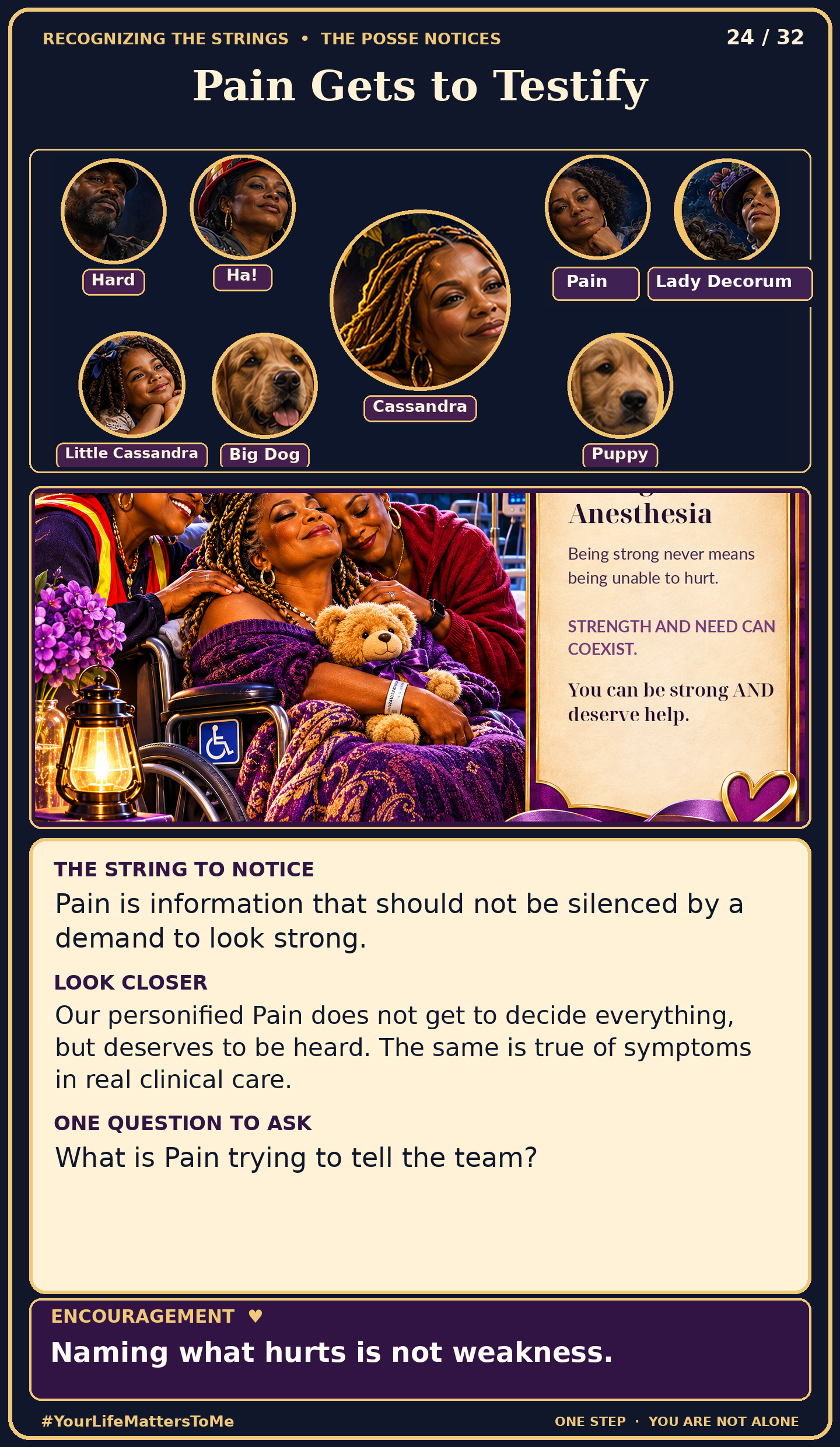
Card 24 — Pain Gets to Testify Pain must not be written out of the story just because someone else finds it inconvenient to hear.


