

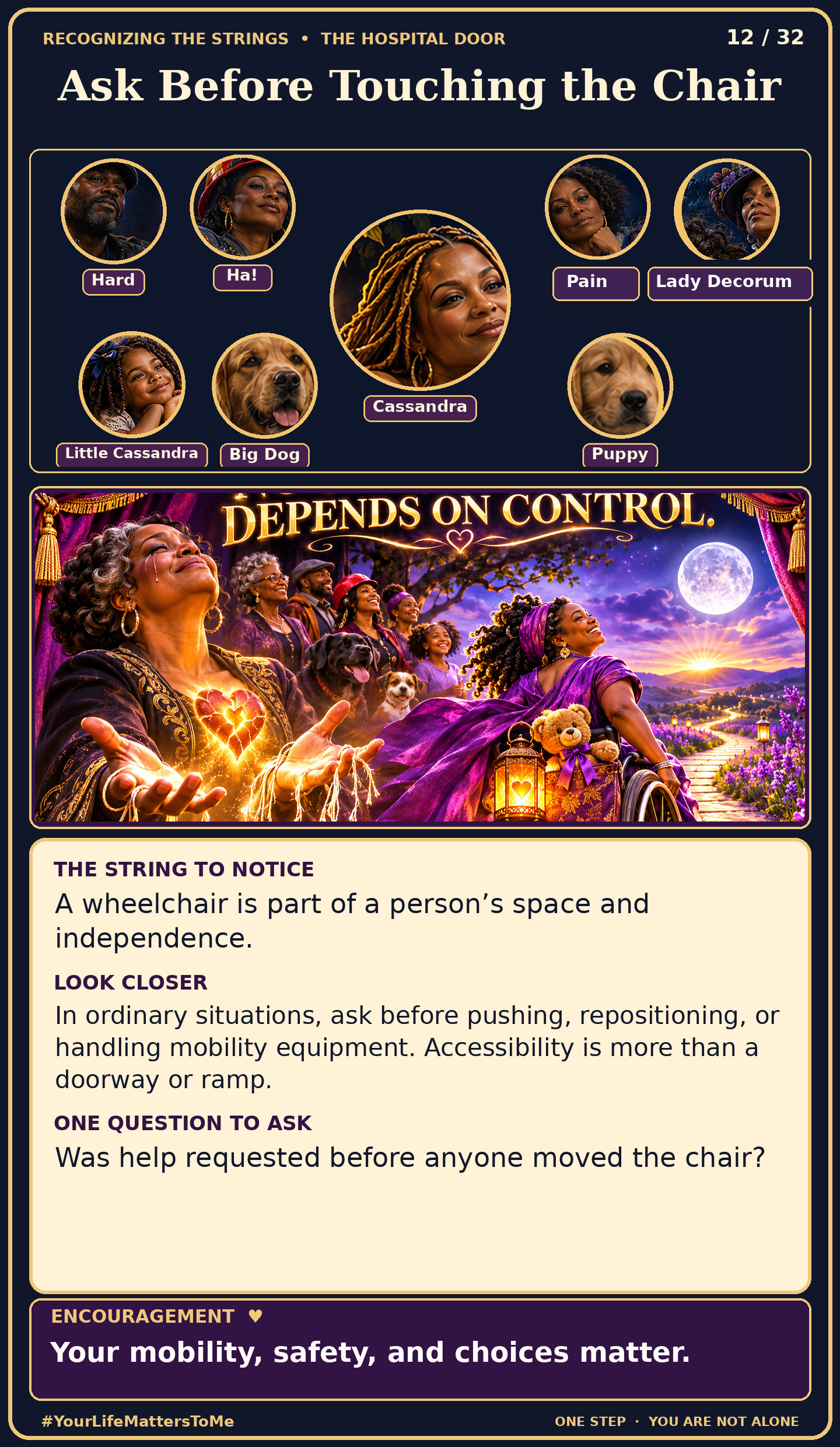
Card 12 — Ask Before Touching the Chair Offering mobility assistance begins with asking, listening, and respecting the wheelchair user’s preferences.
🎬 Today’s illustrated recognition cards
Friday’s cards investigate authority, informed consent, accessible communication, and the right to participate in healthcare decisions.
Beloveds,
Inside a hospital room, a patient may be surrounded by people with titles, training, and experience. All of that expertise matters. So does the person lying in the bed.
The string we’re recognizing today is authority. Expertise deserves respect, but knowledge and professional titles do not erase the patient’s need for understandable explanations and meaningful choices.
A medical conversation should not turn the patient into a spectator in her own care.
Respect means explaining what is being recommended, why, what meaningful alternatives exist, and what could happen if an option is declined. It means making space for questions and obtaining informed consent when required. It also means recognizing that emergencies can create different legal and clinical circumstances; real care is not reduced to a slogan.
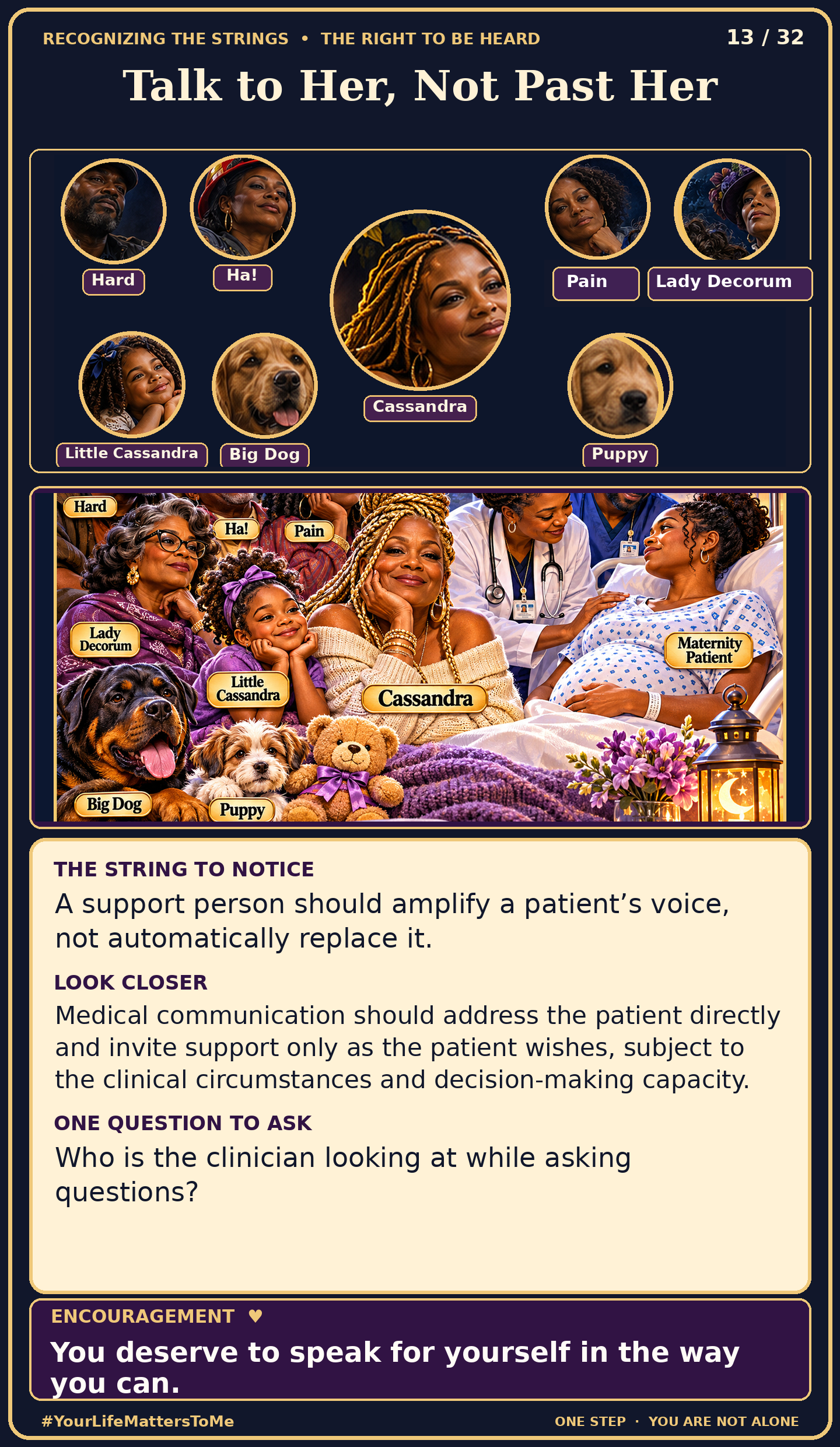
Card 13 — Talk to Her, Not Past Her A companion or clinician should address the patient directly rather than assuming someone else speaks for her.
The Black woman in the room is not difficult because she asks why a procedure is necessary. She is not disrespectful because she wants a clearer explanation. Nor should her family be allowed to speak over her simply because they are anxious to help.
Sometimes an advocate, support person, doula, or interpreter can make communication easier when the patient wants that support. The woman herself remains central to the conversation wherever she has decision-making capacity.
A respectful clinician does not have to agree with every request. But the response should be clear, honest, compassionate, and free from stereotypes about how Black women supposedly behave.
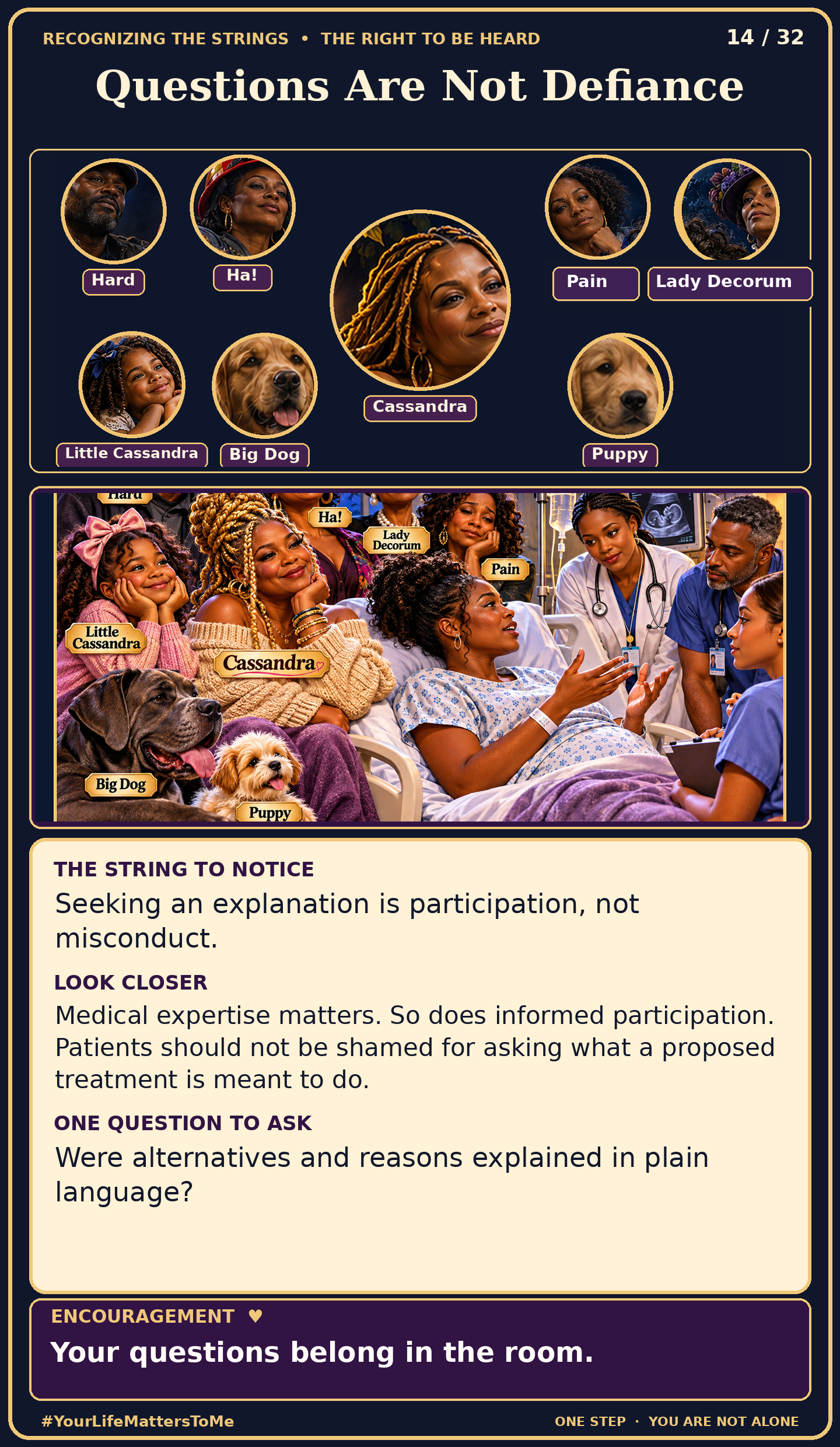
Card 14 — Questions Are Not Defiance Asking why a treatment is recommended is part of understanding care, not proof of disobedience.
The heart question is larger than medicine: can we offer help without quietly taking ownership of someone else’s choices?
For our Beloveds, dignity stays in the room even when people disagree.
🔦 Recognizing the String
The string appears when a patient asks why a procedure is recommended and receives only “Because I said so.” Asking a question is not automatically rejecting treatment. Emergencies may limit how decisions are made; outside those circumstances, informed involvement still matters.
Authority may be held by professionals acting from expertise, fear, urgent time constraints, or established routines. What matters is how it is used: to share information and enable participation, or to pressure compliance without understanding.
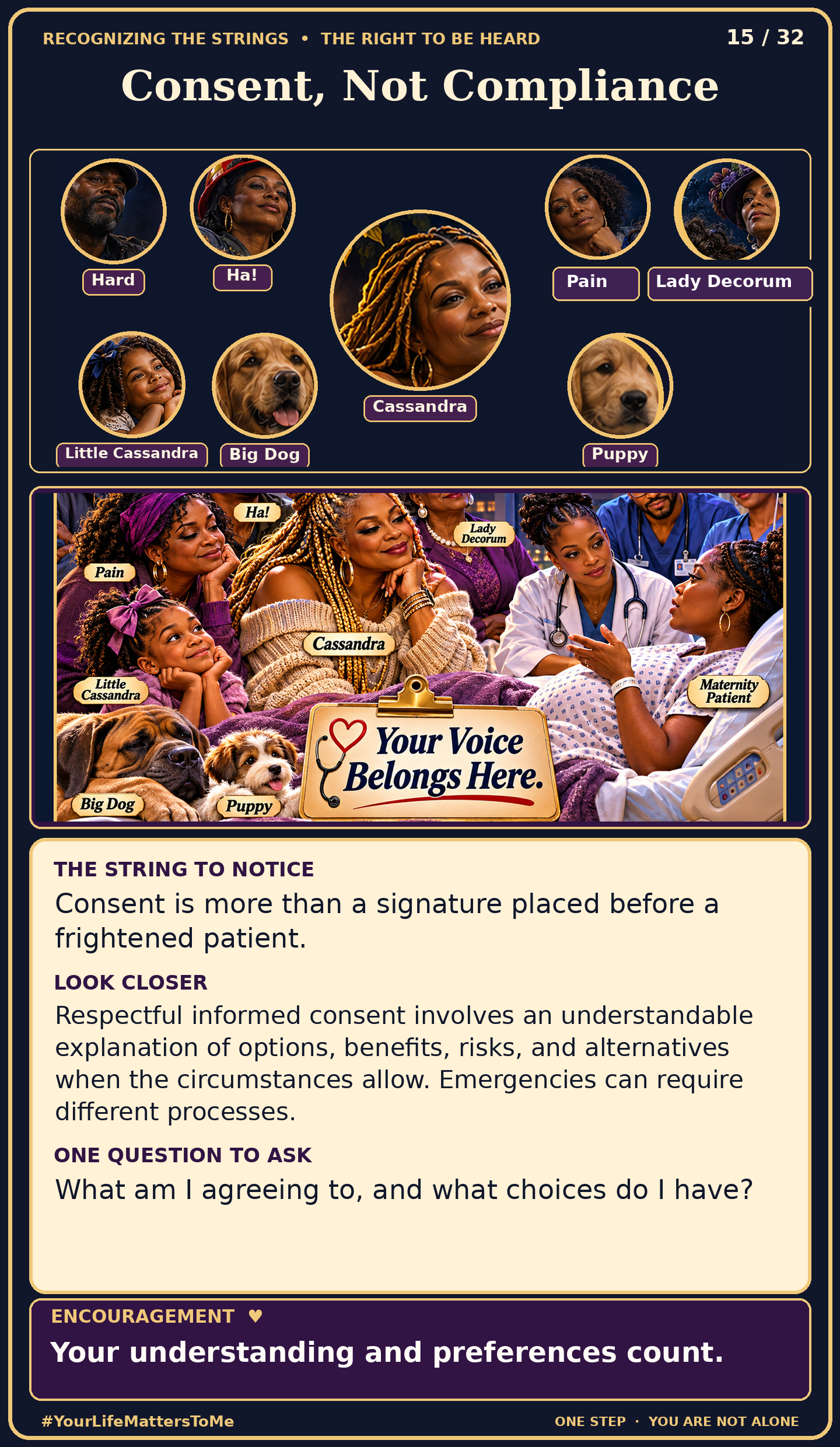
Card 15 — Consent, Not Compliance A meaningful medical decision requires appropriate information and the opportunity to participate, except where emergencies change what is possible.
For Black women and disabled patients, a caregiver, doula, relative, or interpreter can assist when wanted, but should not automatically replace a patient who can make and communicate her own decisions. The same respect applies to wheelchair assistance and accessible communication.
A better approach explains reasons, risks, benefits, alternatives, and relevant limits; listens to concerns; and seeks informed consent when required. Clinicians may disagree with a request and still treat the person with dignity.
One step. You are NOT alone.
A question for our Beloveds: When has a clear explanation helped you participate more fully in a decision?
loving me some you
Cassandra
#YourLifeMattersToMe ❤️
Read further: CDC: Respectful maternity care and shared decision-making
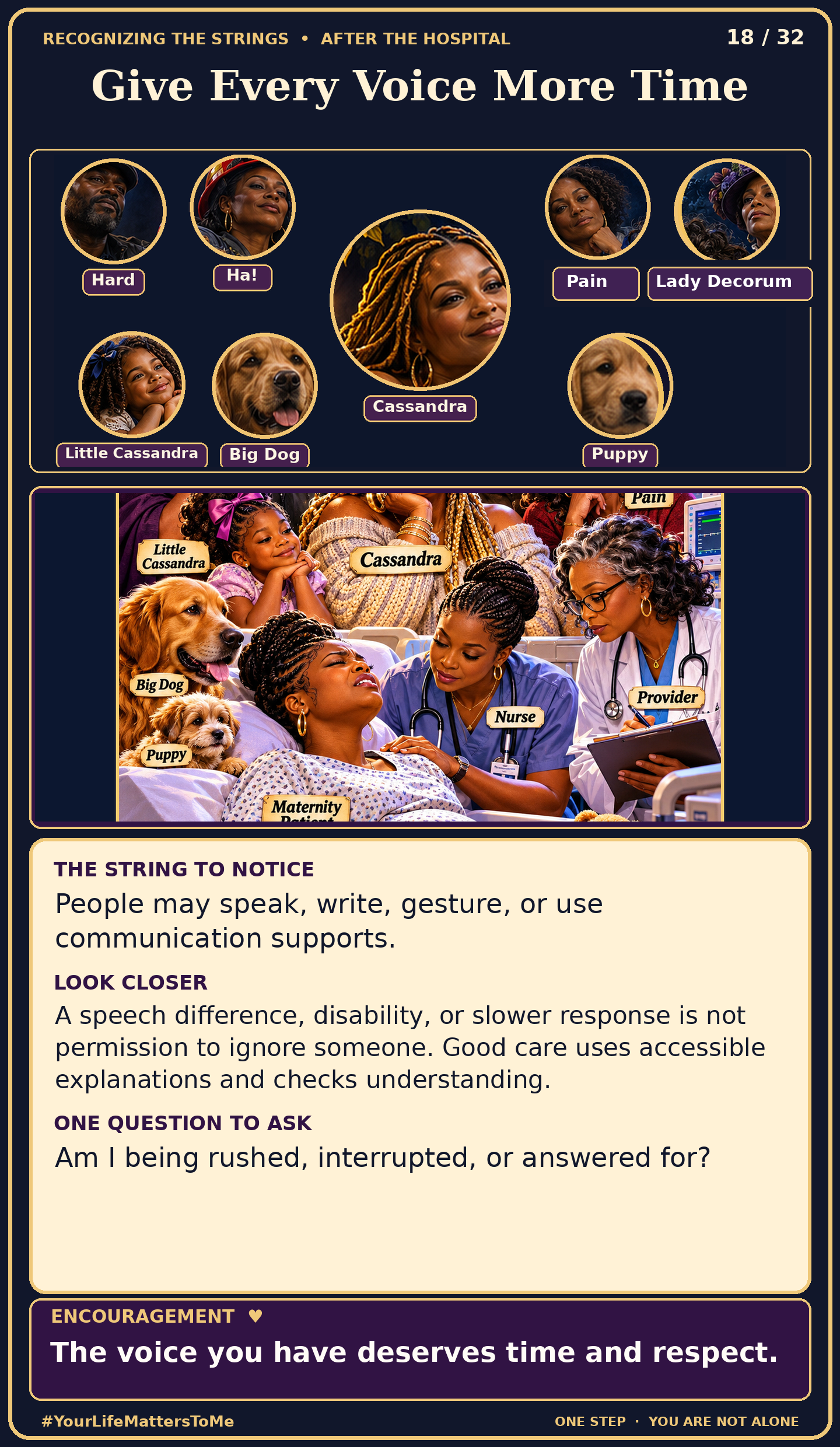
Card 18 — Give Every Voice More Time Clear communication must also include those who speak slowly, use aids, or need additional time.


